The colour spine that makes a case work
Two neutrals, chosen to work with each other, decide whether fourteen pieces produce forty outfits or twelve.
At a glance
- The structure
- Two neutrals, one accent, nothing else
- The pairs that work
- Navy and camel, charcoal and cream, black and grey, olive and stone
- The accent
- Three pieces maximum, all tops
- The test
- Every top against every bottom, out loud
A case fails for one reason far more often than any other. It contains fourteen pieces that produce twelve outfits, because six of them only work with one other thing. The fix is structural and it is decided before anything is folded.
Why two neutrals rather than one
One neutral produces a monotonous case and, more practically, leaves no contrast for a smart evening. Three neutrals produce the fragmentation problem: pieces cluster into groups that do not cross, and the case behaves like three small wardrobes. Two neutrals that work together is the structure that produces the maximum number of connections per item.
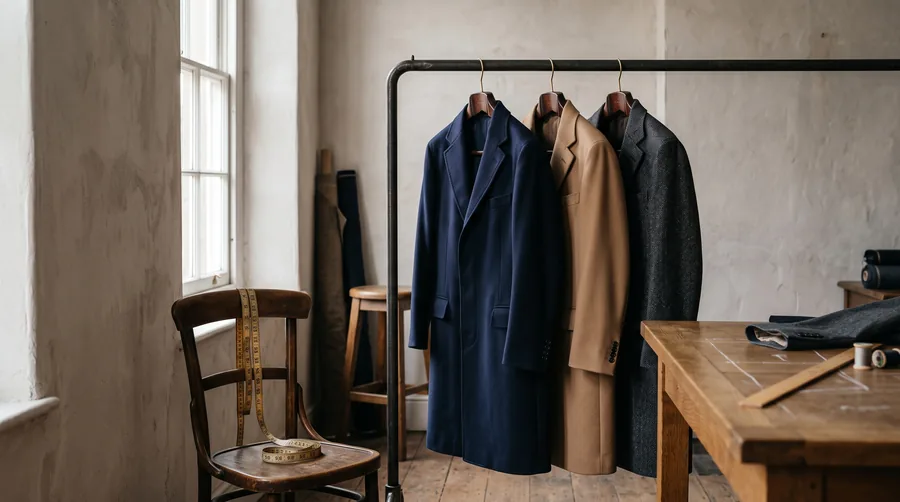
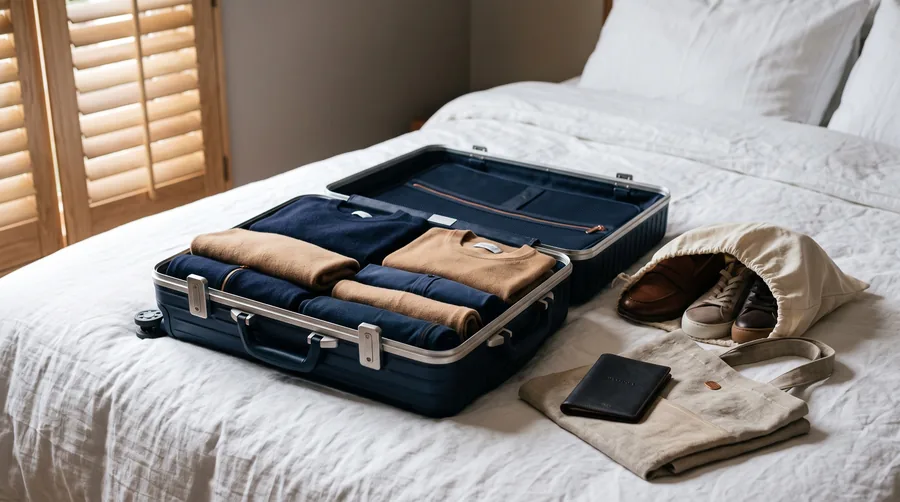
- Navy and camel. Warm, flattering on most complexions, works from a city to a coast.
- Charcoal and cream. Cooler, more formal, excellent in autumn and in cities.
- Black and grey. Urban, unimpeachable, unforgiving in strong sun and hot to wear in it.
- Olive and stone. The best hot weather pair, hides creases and dust, and reads as considered rather than practical.
Navy and black is the pair that does not work, in daylight, and everybody knows it and everybody tries it anyway. Under artificial light it is fine. At eleven in the morning on a terrace it is two different blacks having an argument.
The accent, and its limits
One colour, up to three pieces, and all of them tops or accessories. That is the whole personality budget of a case and it is enough, because an accent works by contrast against the spine rather than by quantity. A second accent colour halves the value of the first.
Pattern counts as an accent and follows the same budget. One patterned piece in a fourteen piece case reads as deliberate. Three read as a case packed in a hurry.
Every top must work with every bottom. Say it out loud, pair by pair, before the case closes.
Fabric, which travels or does not
The spine also has to survive a case. Wool crepe, jersey, high twist wool and most synthetics arrive without creases. Linen and cotton poplin arrive creased and there is nothing to be done about it beyond hanging them in a bathroom during a shower, which works better than any travel iron.
That is not an argument against linen, which is the correct fibre in heat and looks appropriate creased. It is an argument for deciding consciously, because a creased linen shirt at a hot lunch is right and a creased cotton shirt in a meeting is not.
Shoes inside the spine
Shoes have to sit in one of the two neutrals or in a colour that works with both, which in practice means brown with camel and navy, black with charcoal and grey, and tan or white with olive and stone. A pair of shoes outside the spine drags an outfit with it every time it is worn, and shoes are the one category where there is no room to carry a spare.
Spotted an error? Tell the desk